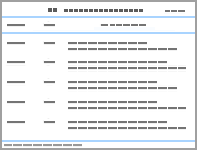
| 技术手段 | 原理 | 优点 | 缺点 | 时间/h | 纯度 | 体积/mL | 产量 |
|---|---|---|---|---|---|---|---|
| 超速离心 | 尺寸和密度不均匀的成分具有不同的沉积速度 | 应用广,适合大批量样品,成本低,技术成熟 | 耗时长,操作烦琐,可能损伤外泌体 | >4 | 中等 | ≤25 | 低 |
| 密度梯度离心 | 尺寸和密度不均匀的成分具有不同的沉积速度 | 纯度高,避免外泌体损伤 | 耗时长,操作烦琐,产率低 | >16 | 高 | ≤25 | 低 |
| 超滤 | 利用膜微孔筛选尺寸不同的分子 | 简单,无须专用设备和试剂 | 过滤膜堵塞,颗粒直径较小的外泌体流失 | <4 | 高 | ≤15 | 高 |
| 尺寸排阻色谱法 | 利用不同尺寸颗粒分子通过膜的时间差异 | 简单、经济、保持生物功能和结构 | 需要特殊的色谱柱和填料,脂蛋白污染 | 0.3左右 | 高 | 0.4~1.5 | 高 |
| 免疫亲和层析 | 利用特定抗体或配体进行高度特异性分离 | 高特异性外泌体亚型分离 | 价格昂贵,取决于抗体的特异性 | 4~20 | 高 | 0.4~3 | 中等 |